
Benchmark equity indices Sensex and Nifty pared early gains to settle lower on Wednesday due to late selling in index major Reliance Industries, ITC and HDFC Bank even as the RBI took the first step towards a rate cut in its monetary policy review. Erasing its early gains, the 30-share BSE Sensex fell 167.71 points or 0.21 per cent to close at 81,467.1. During the day, it surged 684.4 points or 0.83 per cent to hit an intra-day high of 82,319.21.

Finance, ICICI Bank, Mahindra &h Mahindra, Kotak Mahindra Bank and Titan were among the gainers. Bharti Airtel, Adani Ports, Tech Mahindra, Reliance Industries, Axis Bank, Larsen & Toubro were the laggards.

Among the 11 equity sub-categories, thematic funds received the highest net inflows at Rs 9,017 crore, followed by smallcap funds at Rs 5,721 crore and flexicap funds at Rs 5,698 crore.

Stock markets closed lower for the second straight day on Friday amid relentless foreign fund outflows and losses in blue-chip stocks Reliance Industries, ICICI Bank and State Bank of India. Benchmark BSE Sensex declined by 55.47 points or 0.07 per cent to settle at 79,486.32. During the day, it tanked 424.42 points or 0.53 per cent to 79,117.37.
The government has slapped a $2.81 billion (about Rs 24,500 crore) demand notice on Reliance Industries and its partners, including BP Plc for gains made from producing and selling natural gas that may have migrated from neighbouring block of state-owned ONGC. This follows the Delhi high court's decision on February 14, overturning an international arbitration tribunal ruling that held the duo not responsible for paying any compensation for the gas they produced and sold which had allegedly migrated from adjoining fields.

Younger investors with long investment horizons may continue their SIPs.

No, because year-on-year data mask a sharp upward correction in industrial growth but a rate rise could see a surge of fund flows into India and prove counter-productive

'When interest rates rise, the NAVs of these funds will fall.' However, they won't fall as much as longer-duration funds.

From the 30 blue-chip pack, Mahindra & Mahindra, IndusInd Bank, Bajaj Finance, Tata Motors, Bajaj Finserv, Nestle and ICICI Bank were the biggest gainers. State Bank of India, Tata Steel, Adani Ports, Zomato, UltraTech Cement and HCL Tech were among the laggards.

Indian economy is in a sweet spot, with a mix of solid growth and moderating inflation, Moody's Ratings said, forecasting a 7.2 per cent GDP growth in the 2024 calendar year and 6.6 per cent in the next. In its Global Macro Outlook 2025-26, the rating agency said the global economy has shown remarkable resilience in bouncing back from supply chain disruptions during the pandemic, an energy and food crisis after the Russia-Ukraine war began, high inflation and consequent monetary policy tightening.

Invest with a 5 to 7 year horizon so that you are able to ride out price volatility and benefit from the long-term trends of demand and macroeconomic shifts.

R Praggnanandhaa, who drew with Wei Yi of China in the sixth round, is the joint leader in the Tata Steel chess tournament.

From the 30-share Sensex pack, Tata Motors, Tech Mahindra, UltraTech Cement, JSW Steel, Sun Pharma, Asian Paints, IndusInd Bank and ICICI Bank were the major losers. State Bank of India emerged as the only gainer from the pack.

'It is difficult to put a number right now as the value of dollar to rupee has also changed from the exchange rate last time. But don't be surprised if digital rights earns way more than TV.'

'Some part could be used for consumption purposes, and the rest could be used to meet important financial goals.' 'The split can be 30:70 to 50:50, depending on one's situation.'

Only investors with knowledge of cryptocurrencies, long-term conviction, and a long horizon should invest in this asset class.

An NCD's credit rating will tell you whether risk possibility is high or low. Instruments rated below AA are regarded as high-risk.

'Despite rising inflows, many NRIs lack awareness about NRO and NRE accounts and mistakenly use family accounts or invest in a relative's name.' 'Many are unaware of tax implications.'

From the 30-share Sensex pack, Tata Consultancy Services, Infosys, NTPC, HCL Technologies, Axis Bank, Tech Mahindra, Bajaj Finserv, Sun Pharma, IndusInd Bank and Reliance Industries were the major laggards. Tata Steel, Hindustan Unilever, Mahindra & Mahindra, Nestle and State Bank of India were among the gainers.

'Once filed, it cannot be revised or rectified.'

Among the 30 Sensex firms, HCL Technologies, NTPC, Bajaj Finserv, Tech Mahindra, JSW Steel, Titan, Mahindra & Mahindra, Tata Steel, Larsen & Toubro and Tata Consultancy Services were the biggest gainers. Kotak Mahindra Bank, IndusInd Bank, Maruti and Hindustan Unilever were among the laggards.

Zomato emerged as the biggest gainer, followed by Reliance, Nestle, Asian Paints and Power Grid.

India is expected to contribute 15 per cent to the global growth in 2023, an International Monetary Fund (IMF) official said on Tuesday. "Both India and China are expected to contribute 50 per cent of the global growth in the upcoming year (2023). "However, the share of India's contribution to global growth is expected to be around 15 per cent," Krishna Srinivasan, director, Asia and Pacific Department (APD) at IMF said at a roundtable with reporters from south Asian countries.

'As we navigate uncertain waters, a conservative approach to largecap investing could provide a strategic advantage.'
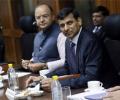
A rapid fall in crude oil prices has meant the RBI is a year ahead of its inflation-targeting schedule

From the 30 Sensex firms, Bajaj Finance, Reliance Industries, Tata Steel, JSW Steel, Tech Mahindra, Tata Motors, Kotak Mahindra Bank and Maruti were the biggest laggards. Reliance Industries Ltd, India's most valuable company, on Monday reported a 5 per cent fall in the July-September quarter net profit as weak oil refining and petrochemical business hurt operational performance. ICICI Bank, Bharti Airtel, Asian Paints, Adani Ports, UltraTech Cement and HCL Technologies were among the gainers.

From the 30 Sensex firms, Mahindra & Mahindra, State Bank of India, Bharti Airtel, Hindustan Unilever, Kotak Mahindra Bank, UltraTech Cement, Adani Ports, and Tata Steel were the biggest gainers. ICICI Bank, IndusInd Bank, Asian Paints, Tech Mahindra, Infosys, HCL Technologies, Tata Consultancy Services, and Larsen & Toubro were among the laggards.

Investors' wealth plummeted by Rs 5.49 lakh crore on Friday as markets faced a massive correction tracking a weak trend in global peers and fresh foreign fund outflows. Falling for the third day running, the 30-share BSE Sensex tumbled 1,017.23 points or 1.24 per cent to settle at 81,183.93. During the day, it plunged 1,219.23 points or 1.48 per cent to 80,981.93.

In a recent clarification, the Central Board of Indirect Taxes and Customs (CBIC) provided insights into the goods and services tax (GST) treatment of transactions involving vouchers. According to the CBIC, vouchers can be categorised into two types.

Adani Ports was the biggest loser in the Sensex pack, declining 1.37 per cent, followed by ITC, Bharti Airtel, NTPC, Maruti, Asian Paints, Sun Pharma, Power Grid, Hindustan Unilever and Larsen & Toubro. In contrast, Bajaj Finserv, Bajaj Finance, IndusInd Bank, Tata Steel, Axis Bank and Tech Mahindra were among the gainers.

Probably 35 bps. There could be even an encore in February 2023 to take the policy rate to 6.5% before the financial year ends, predicts Tamal Bandyopadhyay.
From the 30 Sensex firms, Tata Consultancy Services and HCL Technologies dropped over 3 per cent each. Infosys, Tech Mahindra, Sun Pharma and Tata Motors were the other major laggards. Bajaj Finance, Bajaj Finserv, Nestle, HDFC Bank, ICICI Bank and State Bank of India were among the biggest gainers.

Marnus Labuschagne arrived at the crease in Perth with a plan: channel his inner Cheteshwar Pujara.

Oil-to-telecom conglomerate Reliance Industries Ltd head Mukesh Ambani continues to be the richest Indian and has now broken into the world's top 10 wealthiest persons in the latest Forbes 2024 Billionaire List. Ambani, 66, is ranked 9th on the list with a wealth of $116 billion, up from $83.4 billion in the 2023 ranking, according to Forbes. Gautam Adani is the second richest Indian and is ranked at No.17 on the global list.

Gold prices slumped for the second straight session by Rs 1,150 to Rs 78,350 per 10 grams in the national capital on Monday on frantic selling by stockists and retailers, the All India Sarafa Association said. The precious metal of 99.9 per cent purity closed at Rs 79,500 per 10 grams on Friday.

Vikramaditya Motwane and Satyanshu Singh have created an excellent but grim series, applauds Deepa Gahlot.

If you already hold significant amounts of equity in your portfolio, avoid MAAFs with over 60 per cent equity. But if you lack equity exposure, an aggressive MAAF may be appropriate.

Sensex drops 138 points on foreign fund outflow

In the Union Budget for Financial Year 2023-24 (FY24), Finance Minister Nirmala Sitharaman had held forth on the need for better governance and investor protection in the banking sector. She had proposed certain amendments to the Reserve Bank of India Act (RBI Act), 1934; the Banking Regulation Act (BR Act), 1949; and the Banking Companies (Acquisition and Transfer of Undertakings) Act, 1970.
From the 30 Sensex firms, Tata Steel, JSW Steel, Power Grid, HDFC Bank, Tata Motors and Larsen & Toubro were the biggest gainers. Hindustan Unilever, Infosys, Bajaj Finance, Axis Bank, Kotak Mahindra Bank and UltraTech Cement were among the laggards.
